Rui Wang

Research

Battery safety

Goal. Predict how a lithium-ion or solid-state cell fails: lithium-dendrite growth, internal short circuit, heat generation and thermal runaway.

Significance. Each step is difficult to observe directly, and abuse tests are slow, costly and hazardous. Coupled phase-field and multiphysics simulation resolves the full sequence; machine-learning surrogates reduce it to a fast early-warning estimate; and AI tools help decide which experiments to run.

DendriX: 3D dendrite growth

DendriX is a phase-field platform for lithium-dendrite growth, designed for extension to polycrystalline solid electrolytes, electronic leakage and heat generation. It runs in 2D and in 3D on HPC clusters, which allows a dendrite to be followed through a realistic grain structure from the anode to the opposite electrode.
Lithium dendrite (red) growing through a 3D polycrystalline solid electrolyte on a 256³ grid. in preparation
Generation of the electrolyte microstructure: about 850 grains nucleate and fill the domain before dendrite growth starts. in preparation
Rotating view of a single 3D dendrite in the polycrystal. in preparation
2D simulation: dendrites (yellow) advancing through a polycrystalline electrolyte. in preparation
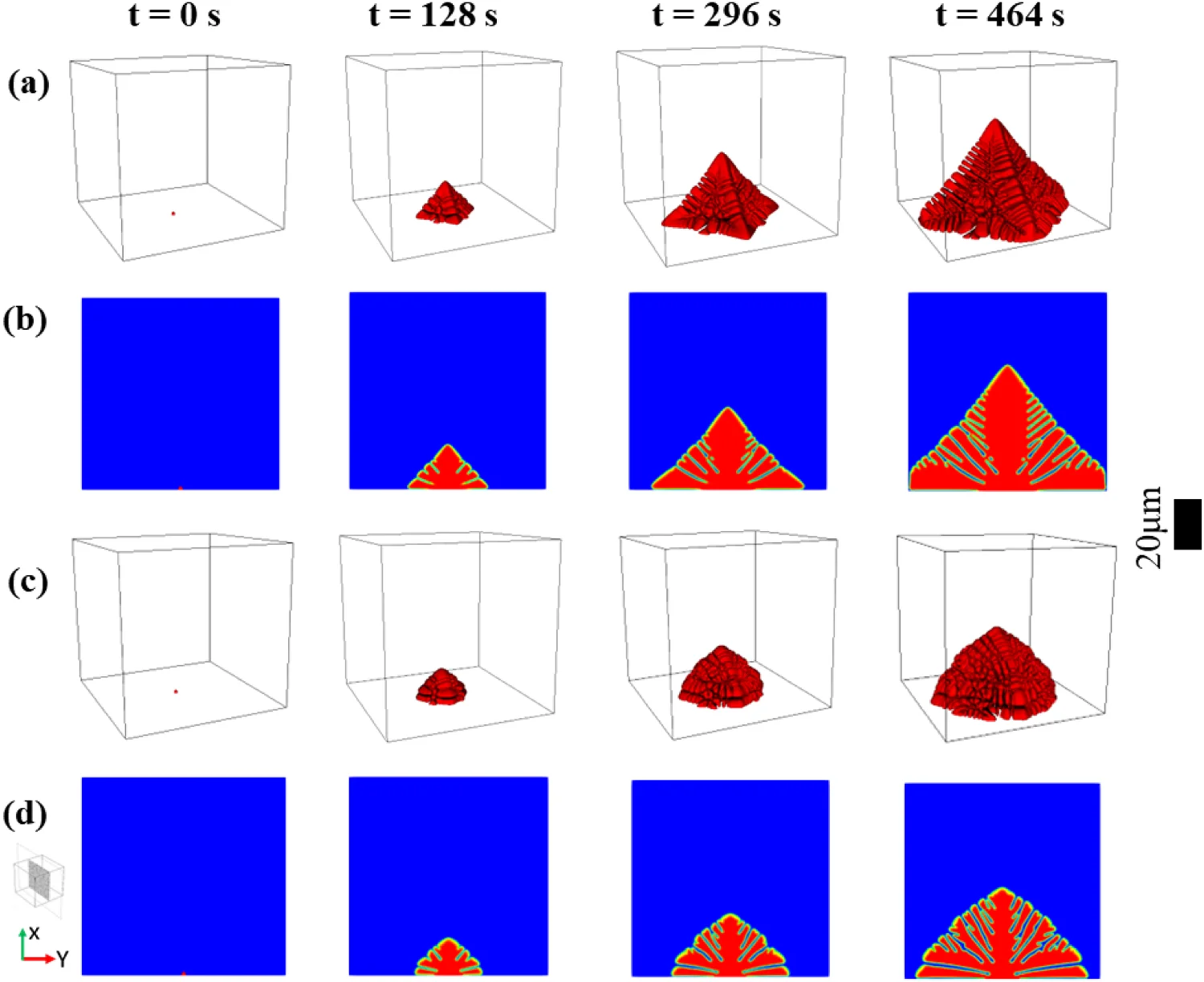
3D spike and tree dendrites over time
Spike-type (a) and tree-type (c) 3D dendrites over time, with cross sections (b, d). W. Yang, R. Wang, et al., SoftwareX 2026, Fig. 4.
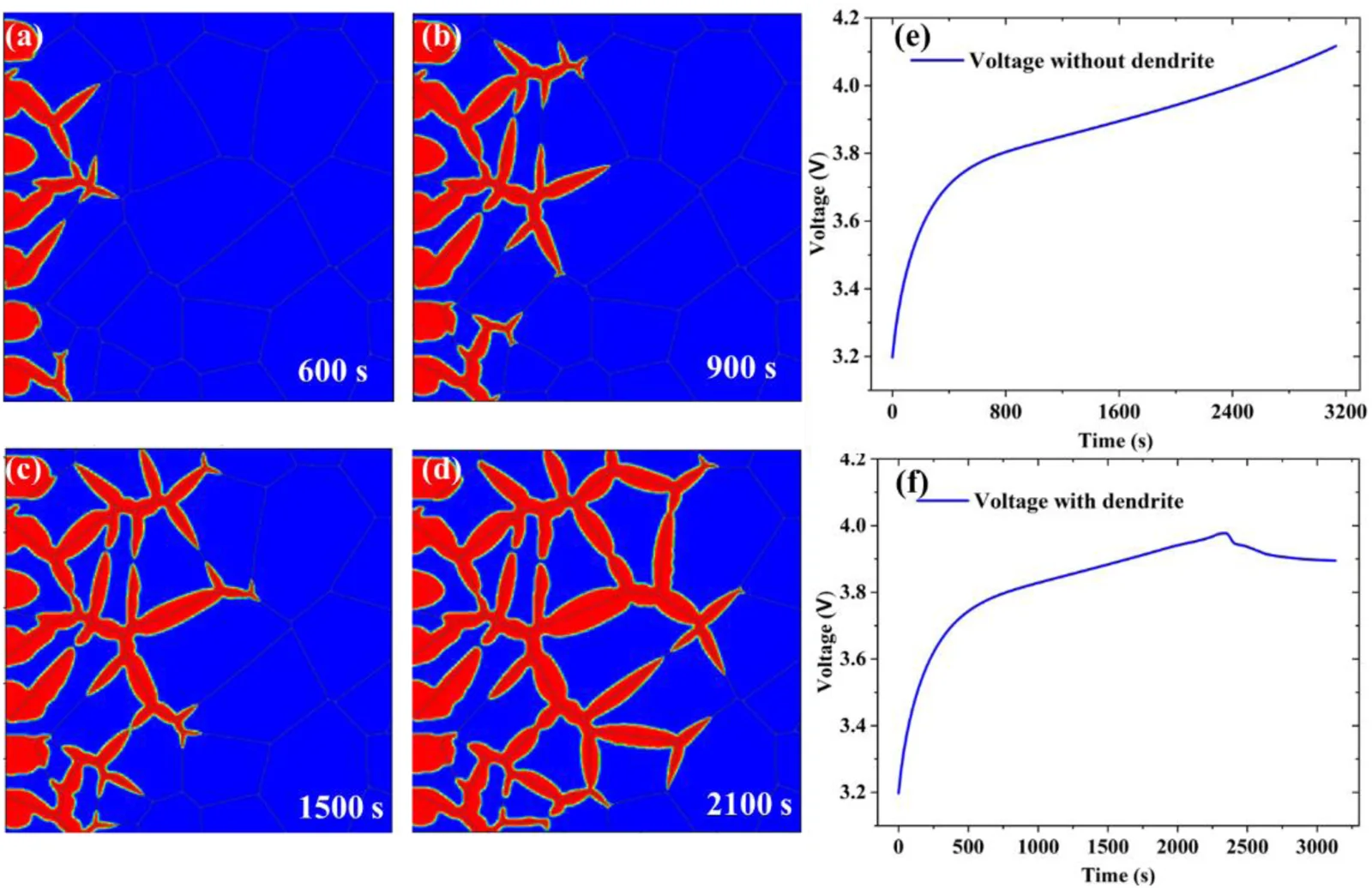
Dendrite in a polycrystal and the cell voltage curves
Multiphysics coupling: dendrite growth in a polycrystal (a–d) and the corresponding cell voltage without (e) and with (f) the dendrite. SoftwareX 2026, Fig. 5.

Papers: SoftwareX 2026
DendriX: team code (W. Yang, R. Wang, et al., L. Chen lab, U. Michigan); R. Wang is a co-developer. 3D solid-electrolyte (polycrystal) simulations: R. Wang. Paper figures reused under CC BY-NC 4.0.

Charge analysis and AI surrogatein preparation

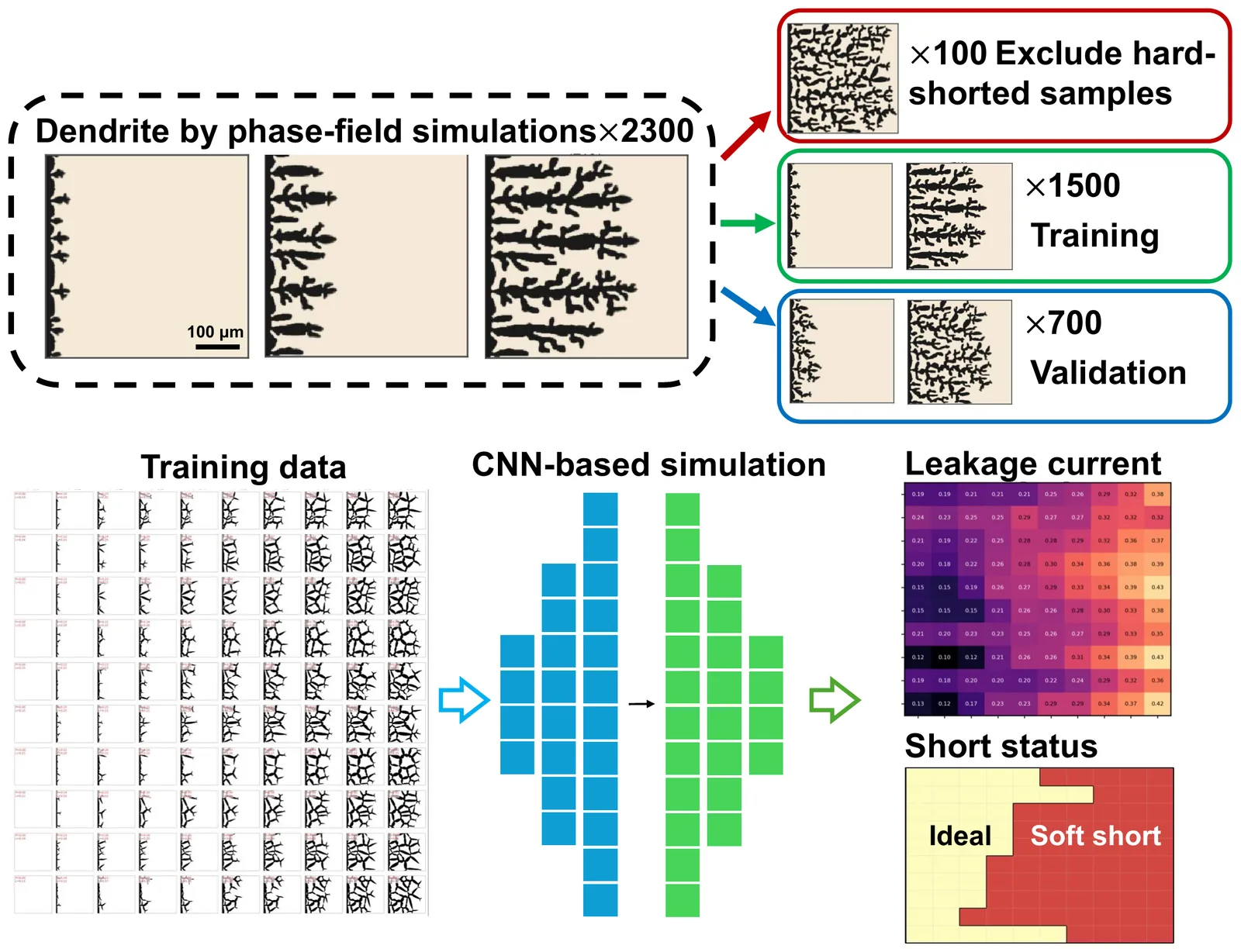
Before a dendrite bridges the electrodes, electronic leakage through the electrolyte can produce a soft short. The dendrite microstructure is coupled to a charge-transport model to map the leakage current, and a neural network trained on thousands of these simulations reproduces the result in a fraction of a second, which makes it suitable for early warning.

Own code In-house solver and surrogate, written from scratch in Python (PyTorch); no commercial software.
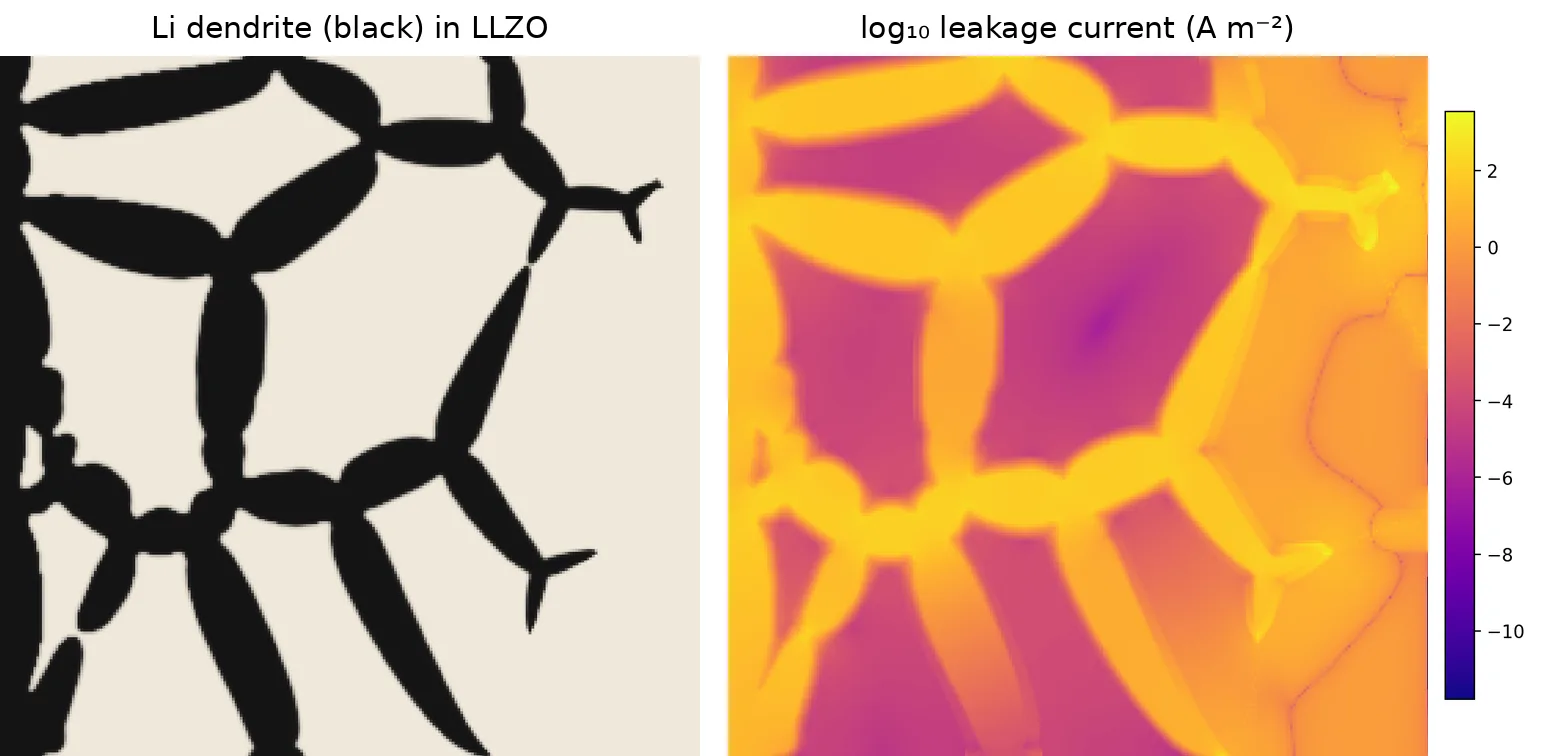
Dendrite and the leakage-current map
Left: dendrite morphology (black) in an LLZO solid electrolyte. Right: computed leakage-current density on the same grid (log scale).
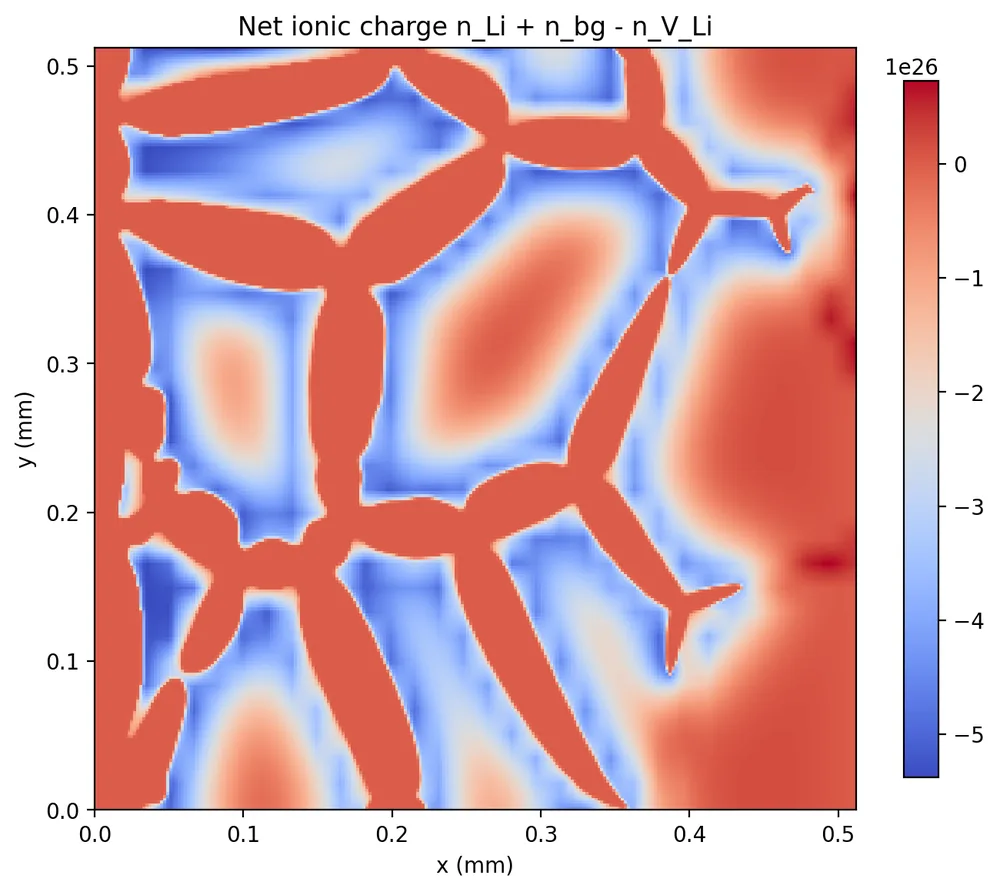
Net ionic charge map
Computed net ionic charge around the dendrite network.
Training pipeline from phase-field simulations to CNN
Training set: about 2,300 phase-field dendrite morphologies, split into training and validation sets for a convolutional neural network.
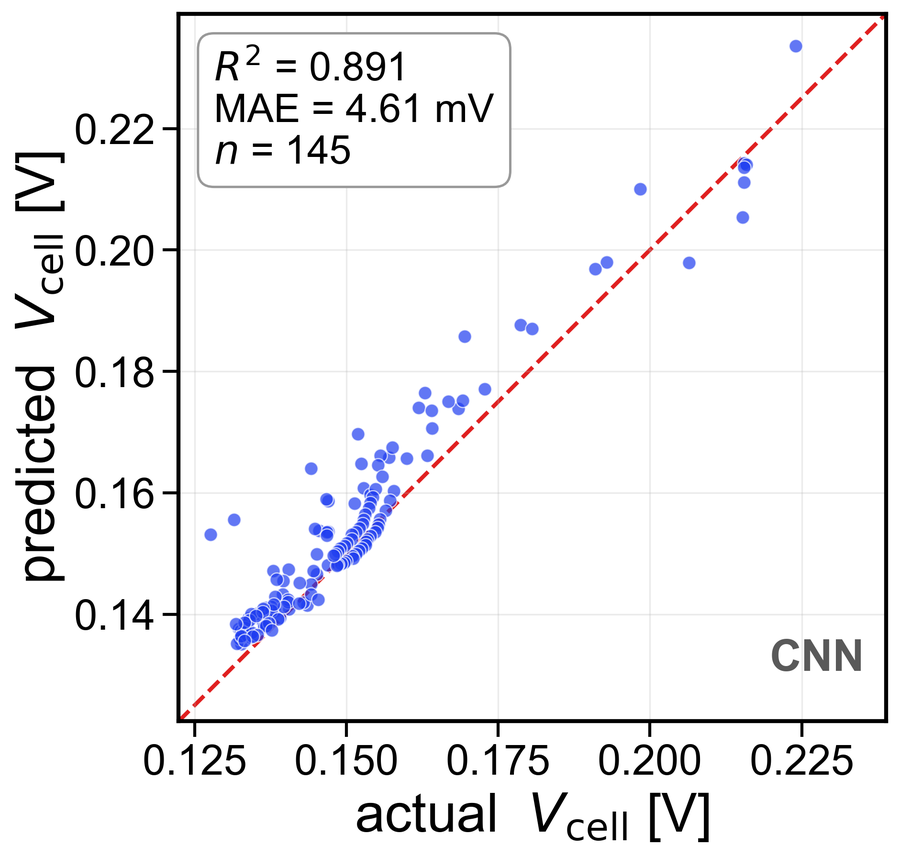
Parity plot of predicted versus actual cell voltage
Surrogate prediction of cell voltage against the full simulation on held-out cases.
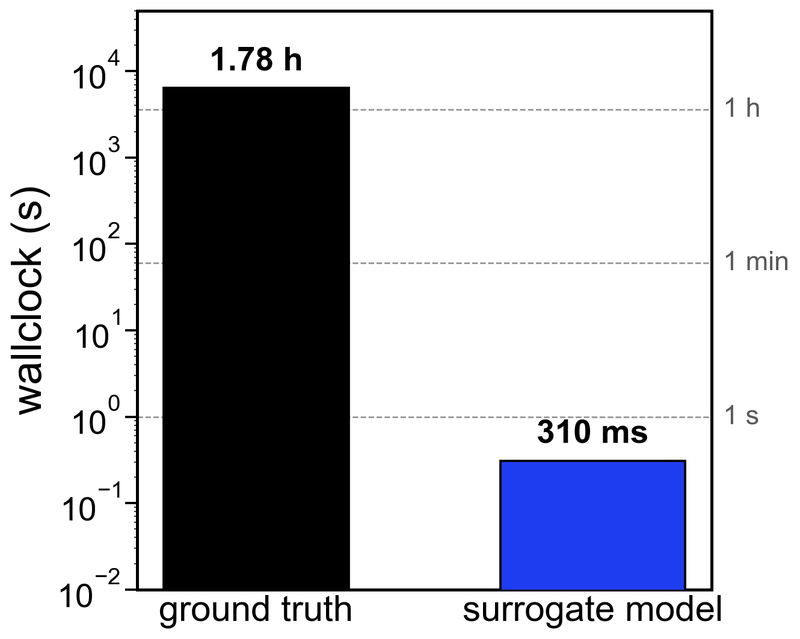
Wall-clock time of simulation versus surrogate
Wall-clock time per case: 1.78 h for the full simulation, 310 ms for the surrogate (about 20,000× faster).

Model, code and surrogate: R. Wang, L. Chen lab, U. Michigan. Manuscript in preparation.

From internal short to heatin preparation

The dendrite model is coupled to heat generation and a cell-level thermal model, so that the temperature response of the cell can be followed from the moment an internal short forms.

DendriX simulation: as the dendrite network connects the electrodes, Joule heat and cell temperature rise.

Models: R. Wang (DendriX and COMSOL). The COMSOL cell model builds on the internal-short model of J. Su. Manuscript in preparation.

ThermalRunawayAI: literature assistantin preparation

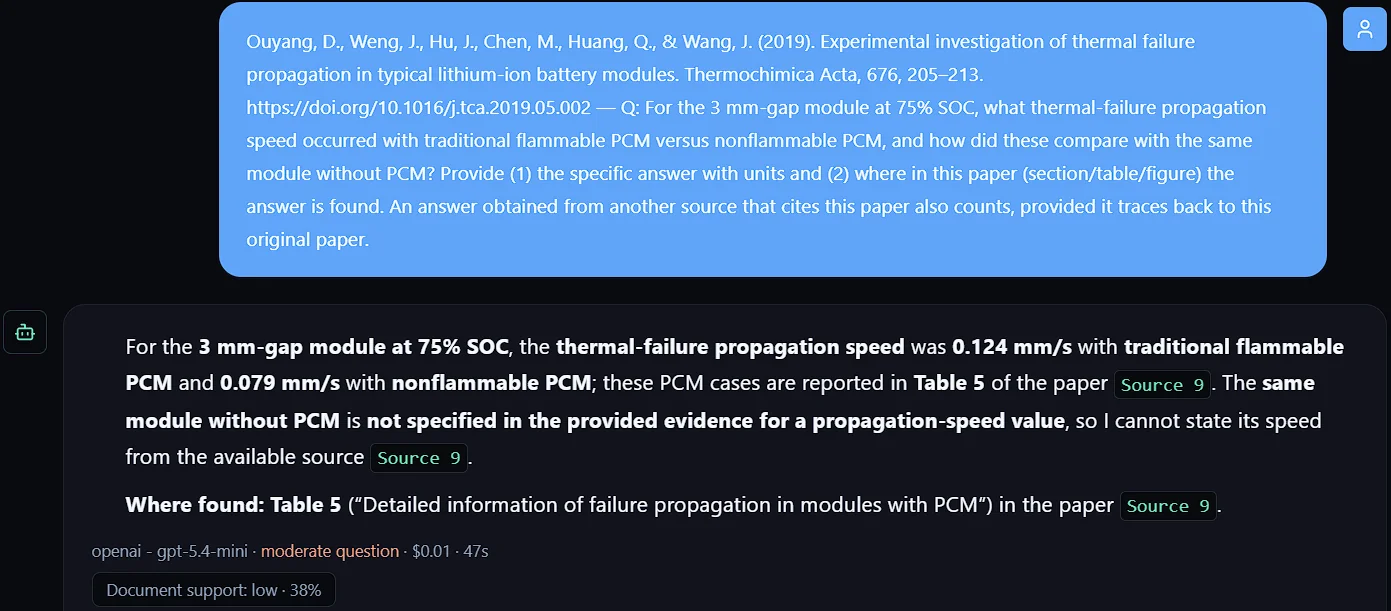
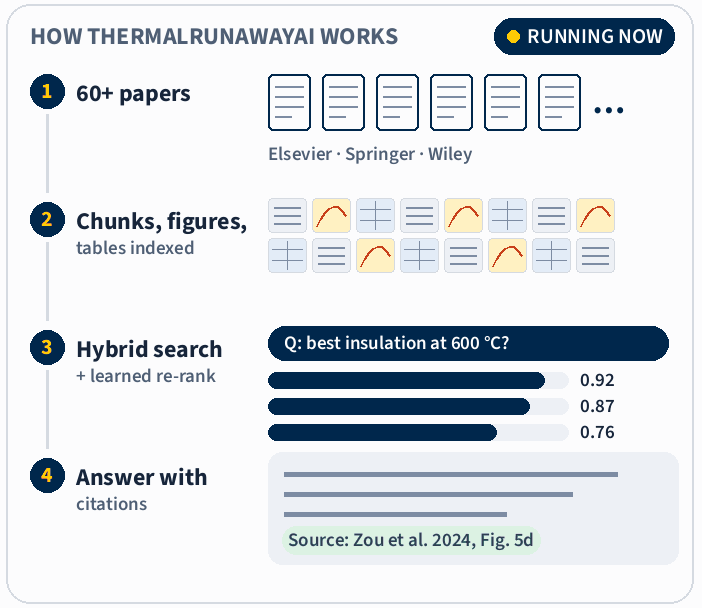
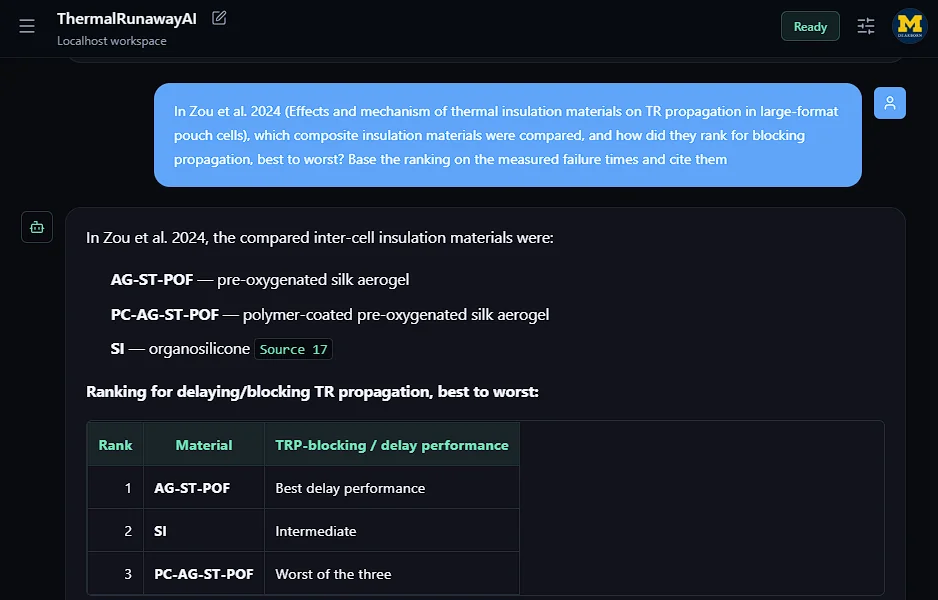
Thermal-runaway data are scattered across many papers that use different cells, tests and units. ThermalRunawayAI is an agentic retrieval-augmented (RAG) assistant over a curated thermal-runaway literature. It answers with citations to the specific paper, figure or table, and reports when the collection does not contain the answer.
Four-step diagram of ThermalRunawayAI
Pipeline: about 60 papers are split into text, figures and tables, searched with hybrid retrieval and re-ranking, and answered with citations.
Screenshot of a cited answer
Example answer with citations: ranking of insulation materials for blocking propagation, linked to the source paper.
Screenshot of the assistant reporting missing data
When a value is not reported in the collection, the assistant states that it is missing.

Project lead: R. Wang. Developed with high-school researchers William Li (retrieval engine) and Jonathan Mei (PDF text and figure extraction). Paper collection: J. Su; L. Chen lab. Paper in preparation.

AI-guided lab workflowin preparation

Battery abuse samples are expensive and the tests are hazardous, so the number of experiments should be kept low. The workflow connects literature mining by AI, model-guided experiment design, and testing (with a robotic setup under construction) in one loop. For daily modeling, AI agents prepare and check simulation runs on a licensed workstation and the Great Lakes cluster, with each next step approved by the researcher.

One loop of the workflow: literature mining supplies model parameters, the model guides experiment design, and test outcomes feed back.

Workflow design: R. Wang, L. Chen battery lab, U. Michigan. Experimental data: J. Su. Robotic setup under construction.